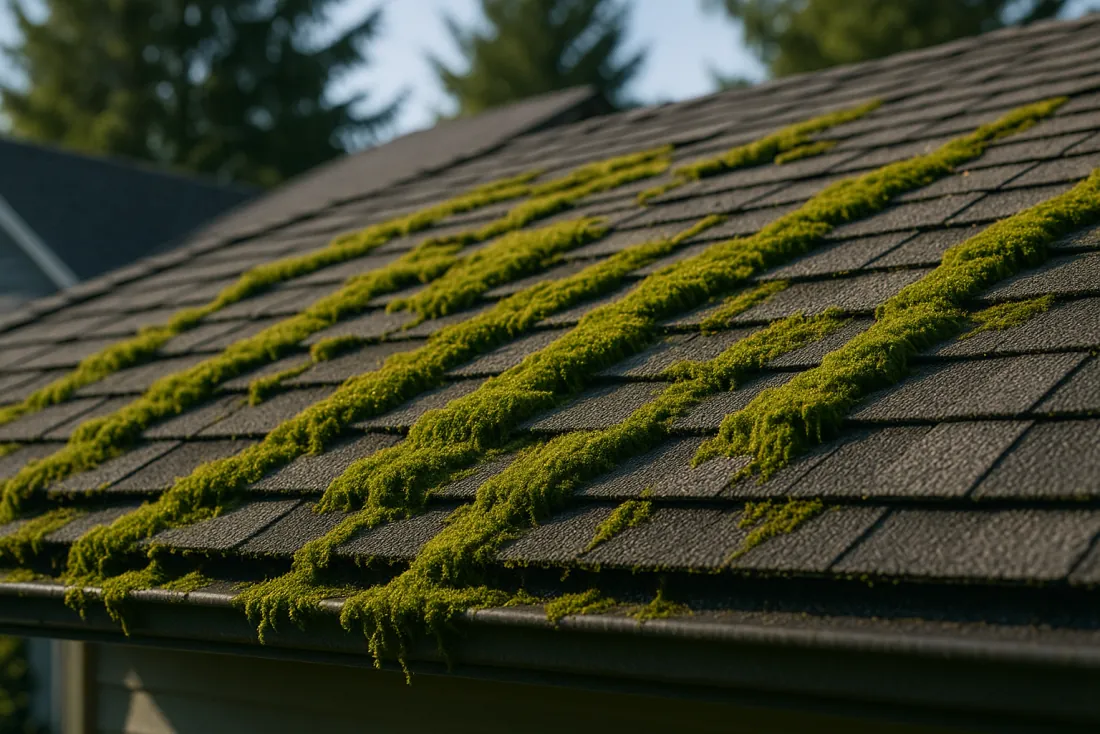
On Vancouver Island, a little green on the roof is so common that most homeowners stop noticing it. That is the problem. Moss is not a cosmetic nuisance — it is a slow, structural attack on the most expensive component of your home, and our climate makes it thrive. Understanding how moss actually damages a roof is the first step to protecting one.
Moss holds water against your shingles
A healthy asphalt-shingle roof is designed to shed water quickly. Moss does the opposite: it acts like a sponge, trapping moisture against the shingle surface and keeping it damp long after the rain stops. In our wet, shaded coastal environment, that means shingles spend far more of their life saturated than they were ever engineered to.
Constant moisture accelerates the breakdown of the asphalt mat and the protective granules on top of it. The result is premature ageing — a roof that wears out years before it should.
It lifts and separates shingles
As moss spreads, it grows under and between shingles, physically lifting their edges. Once a shingle edge is raised, wind and water get underneath it, and what was a surface problem becomes a leak risk. On older roofs this can happen surprisingly fast, especially on north-facing slopes that stay shaded and damp.
Why Island roofs grow moss so quickly
Vancouver Island offers nearly ideal conditions for moss: heavy rainfall, persistent humidity, mild temperatures, and abundant tree cover that keeps roofs shaded. Spores are always in the air, and they re-establish quickly — which is why a roof that was cleaned last year can look green again by the next wet season.
This is also why one-time cleaning rarely lasts here. Removing moss without treating the cause and monitoring for regrowth is a temporary fix.
How to actually stop it
Effective moss control is a process, not a single wash: a careful, low-pressure removal that protects the granules, a treatment that kills growth at the root, and ongoing monitoring so it does not silently return. Aggressive pressure washing — common with budget cleaners — strips the protective granules and can shorten roof life, doing more harm than the moss.
That preservation-first approach is the difference between buying a clean roof for a season and protecting your roof for years.
Key takeaways
- Moss traps moisture and lifts shingles — it is structural, not cosmetic.
- Our coastal climate makes moss regrow fast, so one-time cleaning rarely lasts.
- Low-pressure removal + root treatment + monitoring protects the roof; pressure washing harms it.
Want a straight answer for your roof? Estimate with the Roof Life Calculator or the Replacement-Cost Avoidance Calculator, explore roof preservation, or book a free assessment.