Most homeowners assume a roof fails because something breaks: a storm lifts a shingle, a branch comes down, a flashing lets go. Those things happen, but they are not how the great majority of asphalt roofs reach the end of their life. Ordinary roofs, on ordinary houses, fail quietly and chemically, over years, and by the time it is visible from the ground the process has been running for a decade. It is worth understanding, because it is the difference between a roof that can be treated and one that can only be replaced.
A shingle is asphalt held together by its own oils
An asphalt shingle is a fibreglass or felt mat saturated with asphalt and surfaced with mineral granules. The asphalt is not a single substance. It is a blend of heavy, solid components and lighter, oilier ones, and the balance between them is what gives a new shingle its character: flexible enough to lie flat, move slightly with the roof deck through hot and cold weather, and grip its granules.
That flexibility is not a permanent property. It depends on the lighter fraction staying in the shingle, and from the day the roof goes on, the weather is working to remove it.
Sun and heat drive the lighter fraction off
Ultraviolet light and heat volatilise and oxidise those lighter components, year after year. What is left behind is progressively harder and stiffer. This is the same process that turns a flexible asphalt driveway grey and crumbly, running on a roof that gets far more sun exposure.
A stiff shingle cannot move with the deck any more. Through a normal daily temperature swing the deck expands and contracts underneath it, and a shingle that has lost its flexibility responds by curling at the edges, cupping in the middle, and eventually cracking across the face.
Losing granules makes the next stage faster
The mineral granules on a shingle are not decoration. They are its sunscreen, and they are held in place by the asphalt underneath. As the asphalt hardens, its grip weakens, and granules begin washing into the gutter. Every homeowner who has cleaned a gutter and found what looks like coarse sand has seen this.
Once granules are gone, more asphalt is directly exposed to sunlight, so it dries out faster, so more granules let go. This is why a roof can look serviceable for years and then decline noticeably over two or three seasons. The process is not linear. It accelerates.
On Vancouver Island, moisture does the rest
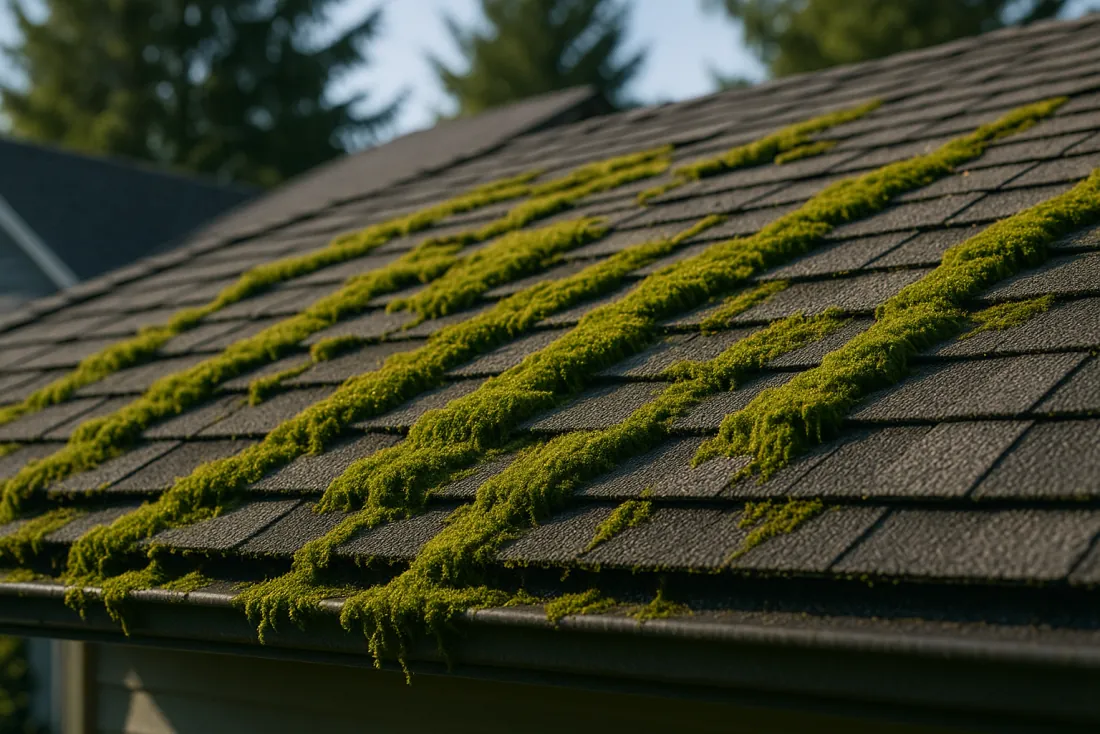
Our climate adds a second mechanism on top of the drying. Heavy rainfall, persistent humidity, shade from mature evergreens, and moss that holds water directly against the shingle mean a coastal roof spends far more of its life wet than the same roof would inland.
A roof that never fully dries between rains stays saturated, and a saturated shingle that has already lost flexibility is far more vulnerable to freeze-thaw damage at higher elevations and to biological growth working into every gap. The drying-out and the wetting are not competing explanations. They compound.
Which is why some roofs can be treated and others cannot
If the problem were purely mechanical, there would be nothing to do but replace. But the loss of the lighter fraction is, up to a point, reversible. A rejuvenation treatment restores part of what the weather has taken out, bringing back flexibility and water resistance in a shingle that still has enough mat and granule left to be worth saving.
The limit is real and it matters. A treatment does nothing for a roof that is already leaking, has widespread cracking, has lost large areas of granule, or sits on a compromised deck. At that point the shingle has failed structurally, not just chemically, and no amount of restored flexibility brings it back.
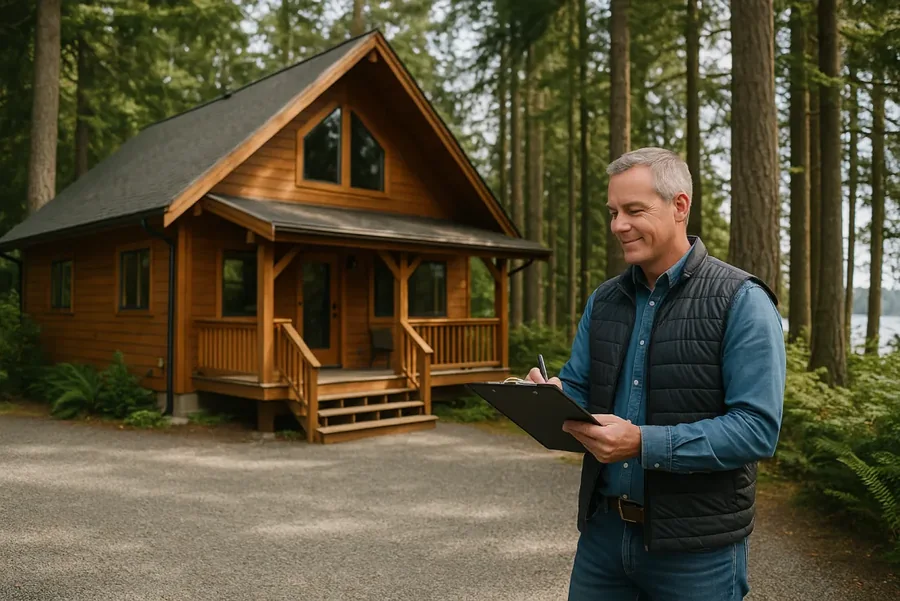
This is the whole reason an honest assessment comes first. The question is never simply how old the roof is. It is whether there is enough left to treat, and that is a judgement made on the roof rather than from the driveway.
Key takeaways
- Asphalt shingles stay flexible because of lighter oils in the asphalt; sun and heat drive those off over years.
- A stiffened shingle curls, cracks, and loses the granules that were shielding it from the sun.
- Granule loss exposes more asphalt, which dries faster, which loses more granules. The decline accelerates.
- Coastal damp, shade and moss keep the surface wet, compounding the drying with a second mechanism.
- Restoring the lost fraction is possible while there is enough shingle left, which is what an assessment determines.
Want a straight answer for your roof? Estimate with the Roof Life Calculator or the Replacement-Cost Avoidance Calculator, explore roof preservation, or book a free assessment.